|
 |
 |
 |
 |
 |
 |
 |
 |
 |
 |
 |
 |
 |
 |
 |
 |
 |
||

|
||
 |
||
 |
||
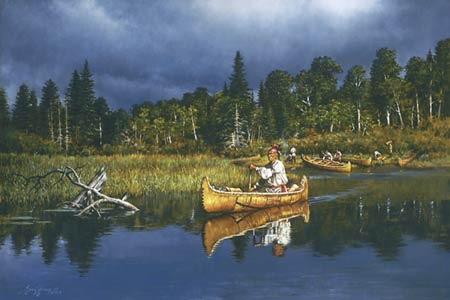
The Bark Cutters by Robert Griffing |
||
|
In the springtime, along the boundary waters of Canada, tribes would collect bark for uses that varied from medicine to canoe building. Bark Cutters depicts the harvest along the shores of crystal waters. Birchbark can be harvested in rolls and stored for years before it is used. It only requires a thorough soaking before it is ready to be put in the production of needed goods. Great numbers of rolls were gathered and stored at the major canoe production yards, as well as in the government storage facilities. These rolls were used in the manufacturing and repair of canoes, as well as for repair kit material to be sent with departing crafts. The traveler by birchbark canoe, ensured he carried spare rolls of repair bark, lashing roots and sealant pitch, maintenance and repair of these vessels was a daily chore. The use of birchbark was by no means limited to groups that inhabited the areas where birch grew. From prehistoric times on, native groups within birch range traded bark and finished goods, to groups well outside the range. Rather than trading, groups such as the Iroquois acquired it in the course of raids. The collectors/builders whom they preyed included the Algonkin, the Great Lake Indians and the groups who settled with the French in the St. Lawrence Valley.
|
||
|
|
||
|
Canvas
Edition: 125 signed and numbered giclee canvas prints |
||
 |
||
|
|
||
|
©2022 Lord Nelson's
Gallery ~ 717.334.7950 |
||
|
|
|